


344 Prompts for Gut-Wrenching True Crime Books Review + Bonuses

Jun 4
15 min read

The true crime genre has become one of the most profitable and consistently popular niches in publishing. From bestselling books and podcasts to Netflix documentaries and YouTube channels, readers and viewers are fascinated by real-life mysteries, criminal investigations, survivor stories, and the psychological complexities behind them.
However, writing a compelling true crime book is incredibly challenging. It requires research, storytelling skills, emotional sensitivity, narrative structure, and often years of investigative work.
That's where 344 Prompts for Gut-Wrenching True Crime Books enters the picture. Rather than giving you generic AI writing prompts, this package claims to provide a complete narrative framework specifically engineered for creating emotionally powerful, victim-centered true crime books using AI tools like ChatGPT, Claude, Gemini, or ChatGPT Codex.
After testing this system, I found that this is a highly specialized publishing system designed to help writers create immersive true crime manuscripts with professional-level structure and pacing. In this review, I'll break down exactly what this product includes, who it's designed for, its strengths and weaknesses, pricing, and my personal experience using it.
What Is 344 Prompts for Gut-Wrenching True Crime Books?
344 Prompts for Gut-Wrenching True Crime Books is a collection of advanced AI prompts specifically created for generating full-length true crime books. The system is built around a victim-centered storytelling methodology rather than the traditional approach of focusing primarily on the criminal.
The prompts are inspired by narrative techniques used by successful investigative journalists and bestselling true crime authors. The prompts guide AI models to produce content that emphasizes:
Survivor experiences
Emotional storytelling
Community and institutional failures
Psychological depth
Narrative pacing
Investigative structure
Professional publishing assets
The package contains 344 specialized prompts covering 43 different true crime categories. Instead of simply asking AI to "write a chapter," the prompts provide detailed instructions regarding structure, emotional arc, pacing, literary style, psychological insights, and character focus.

How to Use These Super Prompts: Complex Engineering, Simple Execution
You don’t need a degree in forensic psychology, a background in investigative journalism, or a certification in prompt engineering to get professional results. All the complex logic is hidden behind a seamless, copy-and-paste interface.
➤ Launch the Bestseller Blueprint
Paste your chosen Super Prompt into ChatGPT or Gemini. The AI will immediately act as your developmental editor, generating:
A market-ready Title & Subtitle.
A high-converting Back Cover Description.
A 4-to-7-Phase Narrative Architecture (moving away from generic summaries).
Ready-to-use Cover and Chapter Prompts.
➤ Execute the Prompts
In the same chat window (to keep the AI aligned with your story's context), complete your book:
Cover Art: Run the cover prompt to get a dark, high-quality, 2:3 ratio book cover with typography.
Immersive Chapters: Run the chapter prompts sequentially to receive 1,500+ word chapters written in a premium literary style.
Built-in Quality Control: The system automatically bans bullet points and academic headers, focusing instead on continuous narrative flow and psychological depth.
➤ Finalize and Export
Copy your text into Word, Atticus, or Google Docs. The clean formatting ensures your manuscript is instantly ready for:
Amazon KDP (Kindle & Paperback)
Audible (Audiobook narration)
YouTube (True crime documentary scripts)
➤ Advanced Feature: The Desktop Agent Method
If you prefer a 100% automated workflow, use included guide for ChatGPT Codex and Claude Cowork. By running a single Mega-Prompt Generator, these desktop agents will build your blueprint, write every single chapter without stopping, and save the finished, formatted .docx files directly to your computer.


About The Creator

344 Prompts for Gut-Wrenching True Crime Books was created by Paulo Gro, a prompt engineer from Chile who has built a reputation for developing highly specialized AI publishing systems across a wide range of profitable niches.
Over the years, Paulo has created thousands of advanced prompts designed to help authors, publishers, and content creators produce professional-quality books faster and more efficiently. His growing portfolio includes popular prompt collections such as 306 Prompts for Monochrome Coloring Books, 322 Prompts for Historical Cozy Mystery Sagas, 343 Prompts for Interactive Story-Based Coloring Pages, 336 Prompts for Cozy Small Town Romance Sagas, 318 Prompts for Children's Hidden Object Coloring Books, 343 Prompts for Western Frontier Sagas, 314 Prompts for Profound Midlife Self-Help Books, 357 Prompts for Declassified Espionage Books and many more.
344 Prompts for Gut-Wrenching True Crime Books Review - Key Features
✅ 344 Specialized AI Prompts
The centerpiece of the product is the collection of 344 prompts. These aren't basic writing requests. Each prompt acts as a complete publishing blueprint that instructs the AI how to:
Structure the narrative
Create emotional engagement
Build suspense
Integrate psychological analysis
Maintain victim-centered storytelling
Deliver professional pacing
This significantly reduces the amount of manual planning required before writing a book.
✅ Long-Form Chapter Prompt Generation
The system generates detailed chapter instructions designed to produce:
1,500+ word chapters
Strong opening hooks
Emotional progression
Psychological insight
Literary pacing
This helps maintain consistency across an entire manuscript.
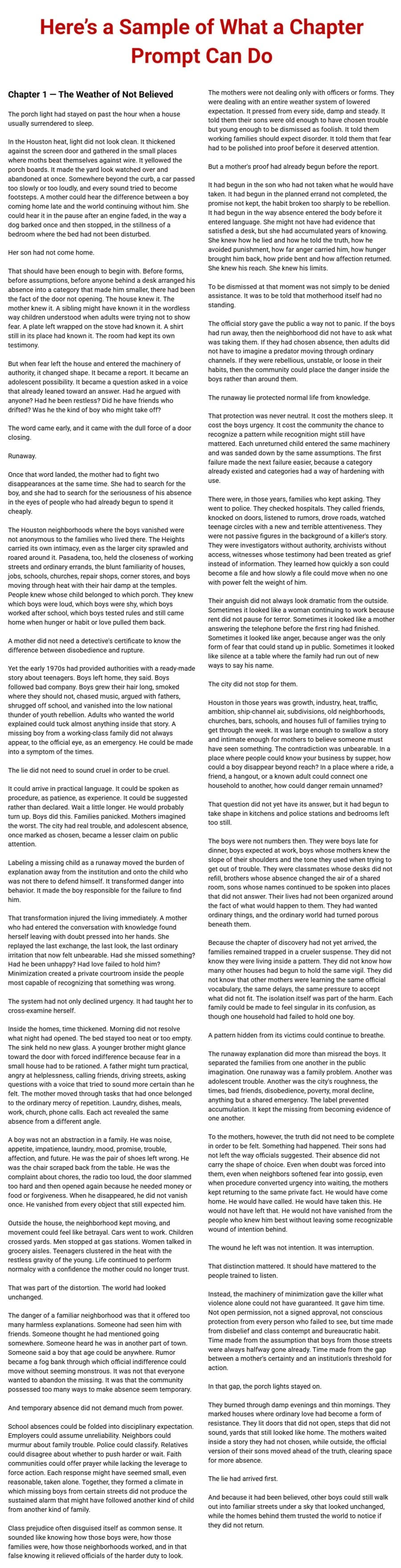
✅ Coverage of 43 True Crime Niches
One feature I found particularly valuable is the breadth of niches included.
Examples include:
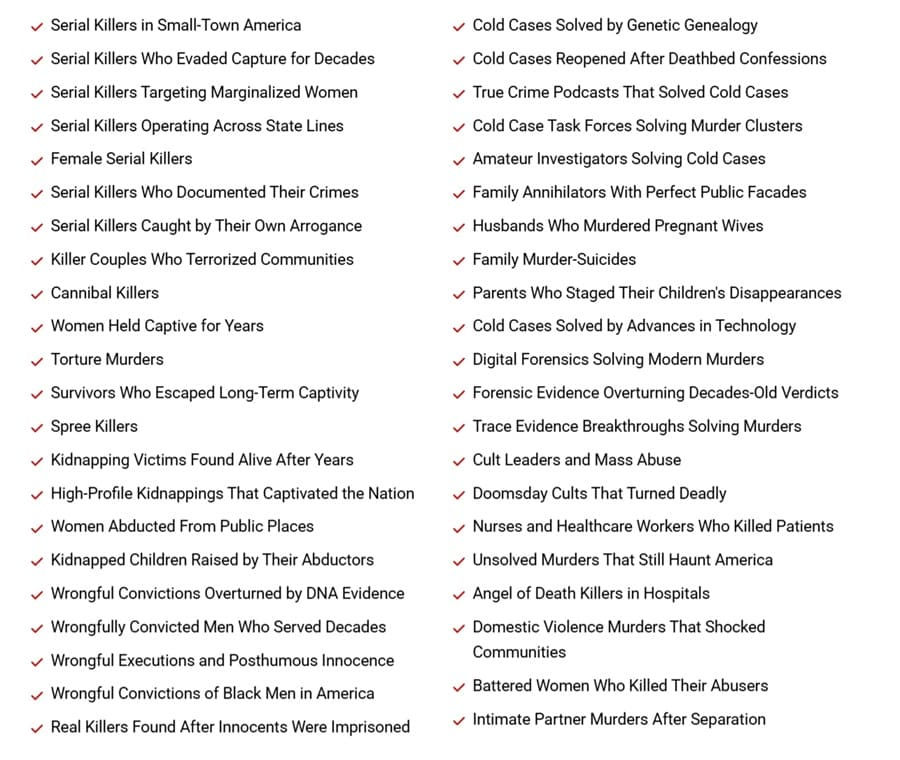
This variety allows publishers to build multiple books and even entire series within different segments of the true crime market.
✅ Adaptive Narrative Architecture
Most AI writing systems produce predictable structures. This product takes a different approach. The prompts instruct AI to generate custom narrative frameworks consisting of multiple phases that match the emotional arc of each case. This helps prevent books from feeling repetitive or templated. As a result, each project can develop its own unique flow and storytelling style.
✅ Victim-Centered Storytelling System
This is arguably the product's strongest feature. Many true crime books focus heavily on the criminal. These prompts intentionally place survivors, victims, and families at the center of the narrative.
The framework encourages:
Empathy
Emotional realism
Survivor perspectives
Community impact
Institutional accountability
This approach creates more meaningful and engaging stories.
✅ Professional Book Metadata Generation
The prompts generate:
Titles
Subtitles
Book descriptions
SEO keywords
Marketing copy
This saves a significant amount of time during the publishing process. Instead of staring at a blank page trying to create a compelling title, the AI provides multiple options tailored to the specific story.
✅ AI Book Cover Prompt Creation
Another useful feature is the built-in cover prompt generator. The system creates detailed image-generation prompts that specify:
Atmosphere
Composition
Typography
Color palette
Genre expectations
These prompts can be used with AI image generators to create professional-looking book covers.
How Much Does 344 Prompts for Gut-Wrenching True Crime Books Cost?
❤️ 344 Prompts for Gut-Wrenching True Crime Books Front End ($17)
I picked up 344 Prompts for Gut‑Wrenching True Crime Books for $17 as a one‑time purchase, and it paid for itself fast. Victim‑centered true‑crime is hot right now—top titles can move roughly 171 copies a day—so having a system that reliably produces publish‑ready narratives matters. Whether you prefer the straightforward ChatGPT workflow or the Desktop Agent Guide for full automation, the prompts make it easy to create polished, empathetic books readers actually finish.
When you compare $17 to hiring ghostwriters, maintaining writing‑software subscriptions, or buying professional outlines, it’s a very reasonable investment. There are no recurring fees, so you can keep producing new projects without monthly costs. For anyone planning multiple titles, one successful release can quickly cover the price.

The Upsells:
➡️ OTO1 — 718 Prompts for Gut‑Wrenching True Crime Books — $27
Add 718 new Super Prompts across the same 43 categories you already own. Each prompt uses the same Adaptive Narrative Architecture that produces victim‑centered, emotionally powerful books readers can’t put down.
What you get
Same depth, same punch paragraphs, same psychological precision.
Fresh stories, angles, and cases in every category.
Framework ready: prompts follow the identical narrative architecture for consistent quality across your titles.
Niche engineering: prompts target high‑conversion hooks readers are actively searching for.
Visual direction: each prompt includes a cover design brief for dark, genre‑accurate covers.
Market optimization: prompts are pre‑loaded with commercially proven themes.
Case verification: built-in anti‑hallucination rules force the AI to confirm facts or substitute documented cases.
Literary prose mandate: the AI avoids filler, sentence fragments, and robotic phrasing.
Why add 718 prompts?
Scale faster: publish multiple books in a single niche to dominate search results.
Bundle & upsell: create box sets to increase average order value.
Faster testing: iterate across angles until you find a winner.
Never run dry: true‑crime readers binge; 718 prompts keep your pipeline full.
Algorithm momentum: more titles trigger more “also bought” recommendations.
You’re not just buying prompts — you’re buying ready‑to‑publish inventory: cover briefs, chapters, and metadata. One purchase multiplies your publishing capacity and visibility.
➡️ OTO2 — 2,903 Prompts for Gut‑Wrenching True Crime Books — $67
Expand with 2,903 brand‑new prompts across 118 categories you don’t yet own. This is a full library of niche subgenres that opens fresh market opportunities your competitors won’t have.
Scope highlights
Missing persons, wrongful convictions, intimate‑partner crimes, serial predators, child endangerment, cold cases, forensic breakthroughs, institutional cover‑ups — and many more.
Each prompt uses the Adaptive Narrative Architecture, the Case Verification Mandate, Punch Paragraph technique, and literary prose standards.
Why wide publishing wins
More categories = more entry points into Amazon’s algorithm and more readers finding you.
Build topic ecosystems (become the go‑to author for wrongful convictions, missing persons, or domestic violence).
Own blue‑ocean micro‑niches with little or no competition.
Capture every reader mood: cold cases, survivor resilience, forensic thrillers — you’ll have inventory for all of them.
Be ready when a true‑crime story explodes in the media — launch instantly into that category.
Cross‑sell effect: every new title increases visibility and sales across your catalog.
2,903 prompts = 2,903 potential titles. Each one is a plug‑and‑publish asset built to convert.
➡️ OTO3 — 7,011 Prompts for Gut‑Wrenching True Crime Books — $97
Go all‑in with 7,011 prompts across 286 ultra‑specific categories that map virtually every corner of the genre. These are micro‑markets virtually untouched by other publishers.
What this unlocks
Themes nobody else is covering: predators in trusted roles, trafficking and modern slavery, foster‑care failures, medical and elder abuse, region‑specific crimes, and dozens more.
Every prompt carries the full engine: Adaptive Narrative Architecture, three DNA threads (victim empathy, distorted reality, community complicity), Case Verification Mandate, Punch Paragraphs, sourced dialogue, and a ban on generic AI filler.
Be the big fish in many small ponds
Zero competition niches let you claim instant authority.
Rank first in ultra‑specific searches because you’re the only one publishing there.
Publish continuously — 7,011 prompts give you a virtually endless supply of titles.
Future‑proof your catalog: whenever a topic trends, you already have material ready to launch.
Compound revenue: the more books you publish, the stronger your “also bought” network becomes.
7,011 prompts = long‑term dominance: inventory, authority, and the ability to scale without limits.
Why Should You Choose 344 Prompts for Gut-Wrenching True Crime Books?
My Personal Experience With 344 Prompts for Gut-Wrenching True Crime Books:
I purchased 344 Prompts for Gut-Wrenching True Crime Books because I had been looking for a way to enter the true crime niche without spending weeks researching how to structure a compelling book. I've used plenty of AI prompt packs before, but most of them felt generic. They could generate content, but the stories often lacked depth, emotional impact, and a clear narrative flow.
To test this product properly, I created a publishing project called "The Forgotten Files Collection" My goal was to publish several true crime books focused on cold cases, missing persons, and wrongful convictions.
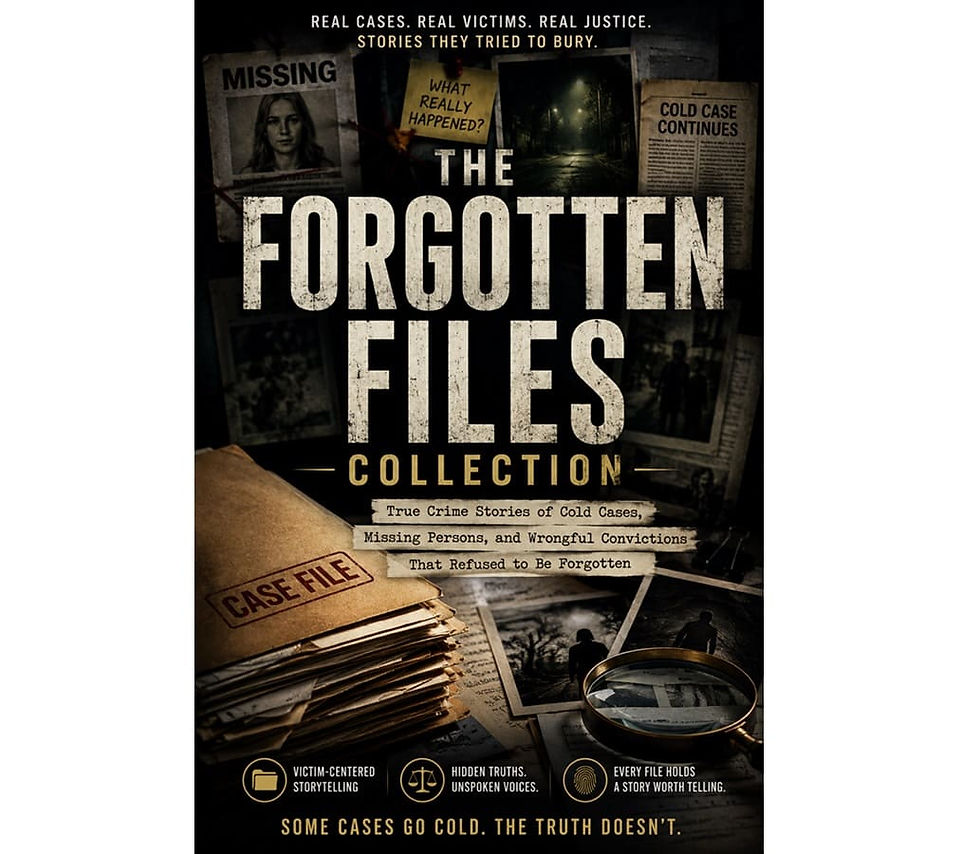
I selected one of the included prompt categories and followed the framework exactly as instructed. The prompts didn't simply tell ChatGPT to write a chapter. They provided detailed guidance on the emotional arc, victim-centered storytelling approach, chapter pacing, psychological insights, and even how each chapter should transition into the next. It felt more like working from a professional book blueprint than using a standard AI prompt.
My first completed project was a book called "Vanished Without a Trace: The Cold Case That Refused to Stay Buried" Using the prompt framework, I generated a full outline, chapter structure, title ideas, marketing copy, and even a cover prompt in a single afternoon. After editing and polishing the manuscript, I published it through my digital publishing business.

Marketing Copy (The Sales Hook) Designed for your Amazon KDP back-cover description to convert casual browsers into buyers. A small town buried the truth. Decades later, her voice is refusing to stay silent. On a crisp autumn evening, a vibrant young woman walked out of her home and vanished into thin air. No struggle. No ransom notes. No bodies. Within months, the tire tracks grew faint, the police tips dried up, and a community chose comfort over answers. The case file was locked away, designated to gather dust as just another statistic. But secrets have a way of clawing their way to the surface. Vanished Without a Trace is a gripping, victim-centered journey into a decades-old mystery that a community tried desperately to forget. Moving away from the sensationalized focus on the predator, this narrative reconstructs the profound human cost of a life stolen, the agony of a family left in perpetual limbo, and the institutional failures that allowed a killer to walk free. Through meticulous investigative pacing and deep psychological insights, this book uncovers the fresh evidence and relentless determination that finally forced a cold case back into the light. Discover the truth that wouldn't stay buried. Scroll up and get your copy of The Forgotten Files Collection today. Custom Narrative Architecture & Full Chapter Outline This 5-phase framework avoids sterile, academic subheaders, opting instead for a continuous, cinematic narrative flow featuring raw emotional hooks ("punch paragraphs") and structural tension. Phase 1: The Anatomy of a Disappearance (The Baseline)
Phase 2: The Widening Ripple (The Social Impact)
Phase 3: The Systemic Silence (The Failure)
Phase 4: The Unearthing (The Catalyst)
Phase 5: The Refusal to Fade (The Resolution)
Text-to-Image AI Cover Prompt Optimized for Midjourney or ChatGPT/DALL-E 3 to create a dark, atmospheric, high-impact cover. A dark, atmospheric true crime book cover with a 2:3 aspect ratio. The scene is a gritty, moody investigator's desk made of dark rustic wood. In the center, a thick, vintage leather-bound case file folder sits slightly open, revealing aged, yellowed documents inside. On the desk around the folder, there is an old magnifying glass with a brass handle, a classic fountain pen, a rusted vintage skeleton key, and a dramatic, black-and-white polaroid photograph of a missing young woman from the 1980s. A single, intense overhead desk lamp casts sharp, dramatic shadows (chiaroscuro lighting), illuminating the textures of the old paper and crinkled dust. In the background, out-of-focus shelves filled with old archive boxes and case files are visible in the dim, smoky shadows. Cinematic, gritty, true crime documentary aesthetic. |
Chapter 1: The Final Hour
The light in autumn dies with a peculiar kind of violence. It doesn’t fade so much as it retreats, pulling away from the treeline and leaving the shadows to stretch across the asphalt like reaching fingers. On the evening of October 14, Melissa Vance walked into that encroaching dark. To anyone watching, it was an entirely unremarkable moment—a young woman stepping off her porch, the screen door clicking shut behind her with its familiar, rhythmic rattle. It was a sound that had anchored her family’s evenings for a decade. They didn’t know it was the last time they would ever hear it. Reconstructing the final hour of a life that has vanished is an exercise in documenting the mundane. We look for portents in grocery receipts; we search for tragedy in the casual wave to a neighbor. But there was no grand overture to Melissa’s disappearance. She had spent the afternoon doing exactly what any twenty-two-year-old with her eyes on the horizon would do. She was packing. A new apartment in the city was waiting for her, a tangible symbol of independence just forty-eight hours away. Her sister, Sarah, would later recall the soft thud of cardboard boxes being stacked in the hallway, the smell of packing tape, and the faint sound of a pop song drifting from a portable radio. These are the fragments that trauma preserves in amber. At 6:15 PM, Melissa checked her watch. She told her mother she was stepping out for a quick walk to the local market—just four blocks down a well-lit sidewalk—to grab a coffee and a notebook. She wore a faded denim jacket, jeans, and a pair of worn-out sneakers. She carried twenty dollars in her pocket and a ring of keys attached to a brass fob. She didn’t take her purse. She didn’t lock her bedroom door. Every physical cue she left behind screamed a singular intention: I will be right back. The four blocks between the Vance home and the corner market formed a corridor of absolute normalcy. It was a route Melissa had walked a thousand times. She knew which pavement stones were cracked by maple roots; she knew which porch lights would flicker on as the twilight deepened. Mr. Henderson, raking dead leaves on his front lawn, saw her walk past at roughly 6:22 PM. He offered a brief nod; she gave a quick, bright wave. It was an interaction lasting less than three seconds, yet it would later be picked apart by investigators for days, as if the angle of her wave or the speed of her stride held the key to an invisible trap. She reached the market at 6:30 PM. The security camera above the register—low-resolution, grainy, and tinting everything in a ghostly shade of green—captured her final documented minutes on earth. She bought a medium black coffee and a spiral-bound notebook. The cashier, a high school student named Toby, remembered her being cheerful, if a little distracted. She smiled, took her change, and stepped out of the camera’s frame at precisely 6:36 PM. Then, the world simply ran out of data. The walk back should have taken eight minutes. By 7:00 PM, the coffee on her desk at home had gone cold, the porcelain mug sweating slightly against the wooden surface. By 7:15 PM, her mother, Evelyn, felt the first sharp needle of unease. It wasn’t panic yet—not standard, paralyzing terror—but rather that quiet, instinctual shift in the atmosphere when the math of a routine stops adding up. Evelyn walked to the front window, parting the lace curtains to peer down the street. The porch lights of the neighborhood were all lit now, casting pale pools of yellow onto the empty sidewalks. The wind rustled through the dry oak leaves, sending them scraping across the driveway. The street was perfectly, agonizingly still. |
Encouraged by the results, I created two more books over the next month:
Shadows of the Missing
The Last Known Sighting
Together, the three books totaled more than 100,000 words of content. More importantly, they felt far more organized and emotionally engaging than some of my previous AI-assisted projects.
Over the first three months, the books generated approximately 220 combined sales, producing just over $1,500+ in revenue across eBook sales, paperback sales, and Kindle Unlimited page reads. While those numbers won't make anyone instantly rich, they were more than enough to recover my investment many times over and validate the niche.
What impressed me most wasn't the revenue, though. It was the amount of time I saved. Normally, outlining a nonfiction book can take me several days. With these prompts, I was able to move from idea to finished manuscript significantly faster because much of the structural planning was already handled.
I also appreciated the victim-centered approach built into the prompts. The resulting books felt more thoughtful and respectful rather than sensationalized. That made the writing process easier and, in my opinion, produced a better reading experience.
Of course, I still reviewed the content, edited the manuscript, and fact-checked important details before publishing. This isn't a magic button that replaces good publishing practices. However, it gave me a framework that dramatically reduced the hardest part of the process: figuring out how to organize and tell the story.
Looking back, 344 Prompts for Gut-Wrenching True Crime Books has become one of the most useful niche-specific prompt collections in my publishing toolkit. If you're interested in creating true crime books, documentaries, long-form articles, or even YouTube scripts, I think you'll find a lot of value here. The one-time cost is small compared to the time it can save, and if you plan to publish multiple projects, it has the potential to pay for itself very quickly.
🔴Conclusion
That’s all what I want to share with you about 344 Prompts for Gut-Wrenching True Crime Books. I hope that my review can give you a helping hand in deciding what is best for you.
Important Reminder: When you purchase this product through my special link, you’ll unlock exclusive, valuable bonuses that you won’t find anywhere else! (Please note: these bonuses are only available with the full purchase-not with trial or free versions.)
To claim your bonus gifts, simply complete these two easy steps:
⏩ Step 1: Click the Buy Now button below to secure your copy of this product.

⏩ Step 2: Once your purchase is confirmed, just send a copy of your receipt to lokireviewteam@gmail.com. I’ll verify your order and personally send you all the details on how to access your bonus materials.




Comments