


343 Prompts for Brutally Honest History Books Review & Bonuses
- Paul

- 3 days ago
- 14 min read
343 Prompts for Brutally Honest History Books Review

History is often told through polished narratives, carefully curated to highlight triumphs while glossing over uncomfortable truths. Yet, the real power of history lies in its raw honesty — the messy, complex, and sometimes brutal realities that shaped our world. 343 Prompts for Brutally Honest History Books is a creative resource designed to challenge conventional storytelling and inspire writers, educators, and thinkers to approach history with unflinching candor. This review explores what the product offers, its creator’s vision, its key features, and why it might be the perfect tool for anyone seeking to write history that doesn’t shy away from the truth.
What Is 343 Prompts for Brutally Honest History Books?
343 Prompts for Brutally Honest History Books is an advanced AI prompt collection designed to help you generate cinematic, unfiltered history books using tools like ChatGPT or Gemini. Unlike traditional writing guides that encourage sanitized narratives, these prompts push writers to confront the contradictions, injustices, and overlooked perspectives that often define historical events. Each prompt is crafted to encourage deeper reflection, critical analysis, and creative exploration.
For example, instead of asking writers to describe a famous battle, a prompt might challenge them to explore the human cost of war from the perspective of civilians, or to examine how propaganda reshaped public memory. The prompts are versatile — suitable for academic projects, creative nonfiction, classroom exercises, or even personal journaling.
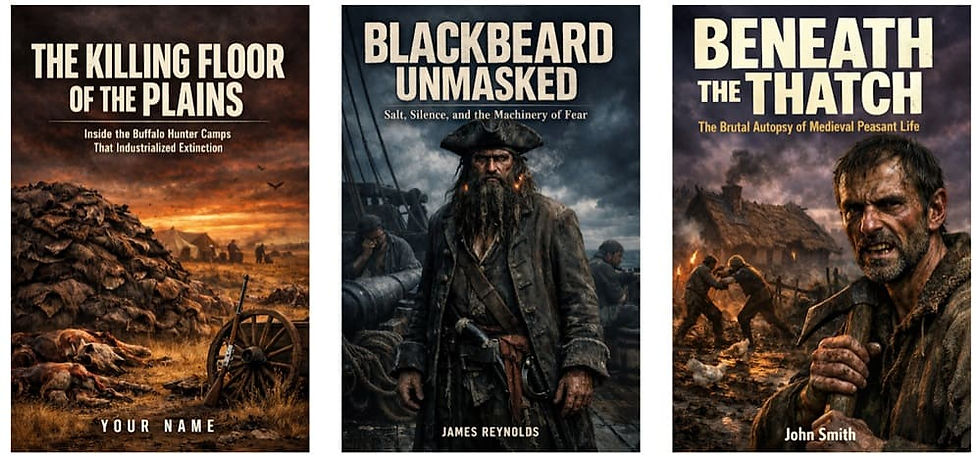
How to Use These Super Prompts:
➤ Step 1: Fire Up the "Bestseller Blueprint"
Snag any Super Prompt, slap it into a fresh ChatGPT or Gemini chat. Boom—AI morphs into your no-nonsense Lead Historical Editor, dropping a ready-to-rocket book skeleton.
Instant Branding: A killer title and subtitle loaded with scroll-halting trigger words.
Sales Hook: A myth-smashing back-cover blurb that converts window-shoppers to wallet-whippers.
"Historical Autopsy" Framework: A custom, insider methodology turning your book into a premium exposé series, not some dime-store recap.
Your Action Plan: Pre-loaded Cover Prompt plus 10 chapter blueprints, primed for liftoff.
➤ Step 2: Crank Out Cover & Chapters (One Chat, Zero Hassle)
Stick to that same chat—lock in the savage, detective vibe. Your book explodes into existence in minutes.
Natively Generated Art: Drop the Cover Prompt. Get a photorealistic 2:3 book cover with pro-level typography baked in. Kiss designer bills and extra apps goodbye.
Deep-Dive Chapters: Feed in the 10 Chapter Prompts sequentially. Out pop 1,800+ word beasts of immersive, pulse-pounding narrative.
Automated Quality Control: Skip the fact-checking grind or tone tweaks. Built-in rules cram in forgotten "receipts" (real history bombshells) and that gritty, HBO-drenched voice from page one to the end.
➤ Step 3: Copy, Package & Conquer
These prompts enforce ironclad formatting—no sloppy bullets or egghead headers. It's seamless cinematic flow with bold titles, ready to roll.
Frictionless Formatting: Pure, unbroken narrative propulsion.
Simple Assembly: Paste text and cover into Word, Atticus, Google Docs, or Canva. Edits? Barely a blip.
Multi-Platform Domination: Your savage history tome is locked and loaded for Amazon KDP (ebook & paperback glory), Audible true-crime narration, or YouTube scripts that glue eyes to screens.

About The Creator

343 Prompts for Brutally Honest History Books is created by Paulo Gro, a dedicated prompt engineer who has built a reputation around designing highly structured, commercially focused AI prompt systems.
He specializes in building large, category-specific prompt collections designed for publishers and content creators. And if you’ve been in the AI publishing space for a while, you’ve probably seen some of his other prompt packs floating around.
Some of his previous releases include:
336 Prompts for Buddhist Wisdom Books
336 Prompts for Complete Romantasy Sagas
327 Prompts for Tiny Action Books
330 Prompts for Bad Joke Books
329 Prompts for Bible Devotionals
297 Prompts for Complete and Consistent Coloring Books
317 Fantasy Spot-the-Difference Prompts
...and a arsenal more.
343 Prompts for Brutally Honest History Books Review - Key Features
✅ The “Historical Autopsy” Framework
This is the backbone of the entire system. Instead of writing history chronologically like a textbook, the prompts force AI to dissect events, empires, or historical figures using a custom-built investigative metaphor.
Think:
A forensic breakdown of a fallen empire
A medical-style autopsy of a dictator’s regime
An engineering failure analysis of a collapsed civilization
Each book gets its own proprietary framework automatically generated by the prompt. That gives your work:
A premium, branded feel
Clear structural direction
A unique positioning angle that competitors can’t easily copy
It instantly separates your book from generic AI history content.
✅ Cinematic, Anti-Academic Tone Enforcement
One of the biggest problems with AI-generated nonfiction is stiffness. You get robotic transitions. You get “In conclusion…” paragraphs. You get lifeless summaries.
These prompts aggressively prevent that. They include strict negative constraints that:
Ban bullet points inside chapters
Ban dry academic subheaders
Ban textbook-style language
Force continuous narrative flow
The result? Chapters that read more like a high-budget documentary script than a Wikipedia entry.
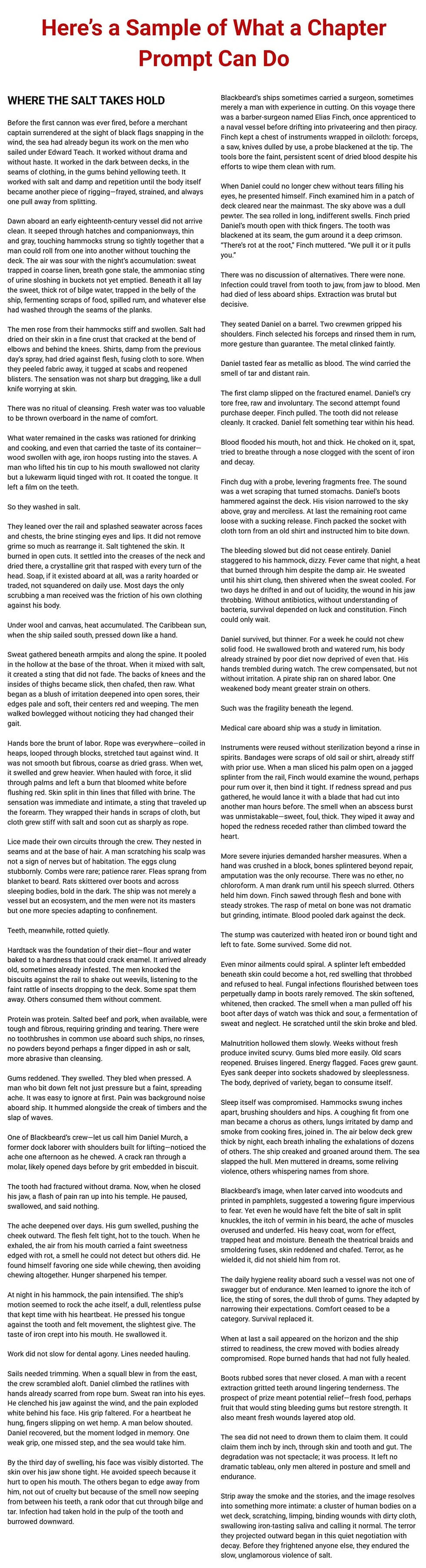
✅ Forced Sensory Immersion
The prompts instruct AI to write through the five senses:
What did the streets smell like?
What did soldiers feel in their boots?
What did hunger taste like?
What did silence sound like before battle?
Instead of saying, “Conditions were poor,” the system forces immersive detail.
✅ The “3-Beat” Fact Anchor System
AI hallucination is a real issue — especially in history. To reduce this, each chapter prompt requires three specific historical narrative beats that must be included.
This does two things:
Anchors the writing around real events or documented realities
Prevents vague generalizations
You’re not just generating mood — you’re generating anchored storytelling.
✅ Complete Book Ecosystem Generation
Each Super Prompt automatically generates:
A high-impact title
A compelling subtitle
Tone keywords
Category positioning
A punchy back cover blurb
Author positioning
A proprietary investigative framework
10 high-depth chapter prompts (1,800+ words each)
A long-form introduction prompt

✅ AI Image Generator Cover Prompt
These prompts generate highly technical cover instructions including:
2:3 aspect ratio formatting
Lighting direction
Color palette
Mood specification
Typography placement
Thumbnail legibility guidance
This is especially useful if you’re publishing on platforms like Amazon KDP, where thumbnail visibility matters.
✅ 49 High-Demand Historical Categories Built In
The system includes prompts across 49 proven, evergreen historical markets — from empires and revolutions to war, scandal, collapse, and political intrigue.

That gives you:
Series-building potential
Cross-selling opportunities
Massive topic flexibility
Evergreen demand
You can build an entire “Unfiltered History” publishing brand using the same framework.
✅ Multi-Platform Monetization Potential
The output isn’t limited to books. Because of the cinematic tone, you can repurpose content into:
YouTube documentary scripts
Audiobooks
Podcast episodes
Paid newsletters
Short-form historical hooks for social media
✅ Structural Consistency Across Projects
If you plan to publish multiple books, consistency matters. Because each book follows a structured investigative framework, your brand develops a recognizable style.
That’s powerful for:
Series publishing
Authority positioning
Audience loyalty
How Much Does 343 Prompts for Brutally Honest History Books Cost?
❤️ 343 Prompts for Brutally Honest History Books Front End ($17)
I picked up 343 Prompts for Brutally Honest History Books for $17 and honestly, it's already paying off. For that price, you’re getting 343 structured, commercially-focused prompts that can easily turn into multiple full-length books, scripts, or content projects. It’s not just a bundle of ideas — it’s a reusable system. I’ve already mapped out three different book concepts from it, and I’ve barely scratched the surface.
And instead of spending months researching and structuring everything from scratch, this gives you a practical shortcut.
You don’t need a history degree.
You don’t need to live in archives.
You don’t need to figure out book positioning on your own.
You copy a prompt, paste it into ChatGPT, and the structure is already there — title, angle, tone, chapters, even cover direction. For $17, the risk is honestly very low compared to the upside. Even if you publish just one solid book or build one monetized YouTube script from it, it can easily justify itself.
If you’ve been thinking about entering the history niche — especially the darker, documentary-style angle — this is a simple way to test the waters without overcomplicating things.

The Upsells:
➡️ OTO 1: 735 Prompts for Brutally Honest History Books – $27
Supercharge your collection with 735 fresh, laser-focused Super Prompts. Built on the same "sensory immersion" magic you love, these aren't scraps—they're precision tools for owning niches like historical mysteries, true-crime deep dives, and shadowy biographies.
Every prompt unleashes the full "HBO-Style Publishing Factory":
Custom "Historical Autopsy" Frameworks: Tailored investigative methods for any era or icon.
Cinematic Chapter Engineering: 10 immersive chapter prompts packed with narrative beats, hidden facts, and no fluff.
Visual Automation: Ready-to-use 2:3 Cover Prompts for stunning, native art.
Market-Ready Metadata: Trigger-word titles, killer blurbs, and SEO that pulls in readers.
Scale to Dominate: More prompts = faster wins. Turn one book into an empire:
Launch themed series (e.g., Slums of Rome, Vices of Emperors).
Bundle 5-10 books into premium collections for KDP or Audible.
Script endless YouTube true-crime docs for years of weekly uploads.
Fuel a Substack with weekly scandal chapters.
➡️ OTO 2: 2,992 Prompts for Brutally Honest History Books – $67
Level up with 2,992 battle-tested Super Prompts across 136 gripping categories—an encyclopedic vault of human drama, disasters, and dark truths. Same elite engineering: "Historical Autopsy" logic, sensory depth, and instant cover gen. From medical nightmares to crime origins, feed readers' deepest curiosities.
Unlock 136 themes like:
True Crime & Underworld: Serial killers, poisoners, 19th-century gangs, cults, mafia roots.
Medical Horrors: Medieval leeches, brutal surgeries, quack cures, Victorian freak shows.
Epic Disasters: Polar fails, shipwrecks, famines, Dust Bowl horrors.
Crime & Punishment: Torture methods, witch hunts, gladiators, penal colonies.
Scandals & Vices: Brothels, opium dens, grave robbing, corrupt cops.
...plus 110+ more high-demand niches. Your all-access pass to uncensored history.
➡️ OTO 3: 6,908 Prompts for Brutally Honest History Books – $97 (God Mode)
The ultimate arsenal: 6,908 Super Prompts spanning 314 ultra-niche categories. They've decoded humanity's wildest stories into ready-to-publish HBO gold. No repeats—just 314 zero-competition ponds where demand rages. Excel at controversial, weird, or terrifying topics with "Historical Autopsy" precision.
Dominate with books on:
Epic Disasters: Titanic, Chernobyl, Dyatlov Pass, Donner Party.
Bizarre & Occult: Witchcraft, exorcisms, cryptids, secret societies.
Taboo Daily Life: Porn history, asylums, sanitation horrors, poisoners.
Tyrants & Legends: Cleopatra, Caligula, outlaws, cult leaders.
Secret "Normal" Histories: Blood, salt, boredom, mirrors, garbage.
...and 300+ hyper-specific gems. Be the big fish:
Zero rivals in niches like Victorian workhouses or 19th-century dentistry.
Instant expert status with visceral deep dives.
Infinite fuel: A new thriller, script, or article daily for 18+ years.
Why Should You Choose 343 Prompts for Brutally Honest History Books?
My Personal Experience With 343 Prompts for Brutally Honest History Books:
When I bought 343 Prompts for Brutally Honest History Books, I didn’t expect magic. I’ve used AI long enough to know that prompts alone don’t automatically create a masterpiece. Most of the time, you still end up fixing tone, restructuring chapters, and cleaning up robotic transitions.
I picked a niche that’s already saturated but usually written in a very dry way: “The Dark Reality of the Industrial Revolution”. Not the usual “innovation and progress” angle — but the grime, factory injuries, child labor, polluted air, and economic exploitation.
I copied one of the Super Prompts and pasted it into ChatGPT exactly as instructed.
Within seconds, I had:
➤ A sharp, marketable title
Title: The Dark Reality of the Industrial Revolution
➤ A subtitle with a strong positioning hook
Subtitle: The Raw, Unsanitized History of the Age of Iron and Agony
➤ A back cover blurb that didn’t sound generic
Steel. Soot. Silence. And the scream of a machine that never sleeps. Welcome to the 19th century, where the air tasted of sulfur and human life was cheaper than a ton of Newcastle coal. While the merchant kings built empires of glass and gold, an entire class of humanity was being ground into the dirt of the factory floor. The Age of Iron and Agony isn't a list of dates—it’s a sensory interrogation of the past. Feel the vibration of the power looms that claimed the fingers of children. Smell the stench of the Thames as it became an open grave. Hear the desperate whispers of the Luddites as they struck back against the gods of the machine. This is history with the skin pulled back. Raw. Unsanitized. Unforgettable. |
➤ A custom investigative framework (this surprised me)
Phase 1: The Schematics (The Setup)
Phase 2: The Gearbox (The Living Experience)
Phase 3: The Exhaust (The Environmental & Social Cost)
Phase 4: The Safety Override (The Resistance)
Phase 5: The System Failure (The Legacy)
|
➤ 10 structured chapter prompts
|
➤ A cover art direction prompt
Prompt: > A high-impact, cinematic book cover for a gritty historical non-fiction title. Subject: A central, haunting focal point—a pair of small, soot-stained hands of a child laborer gripping a heavy, rusted iron gear. The skin is raw and textured with dirt. Background: A blurred, cavernous Victorian factory hall filled with towering steam machinery, silhouettes of spinning belts, and thick, swirling amber-tinted smog.
|
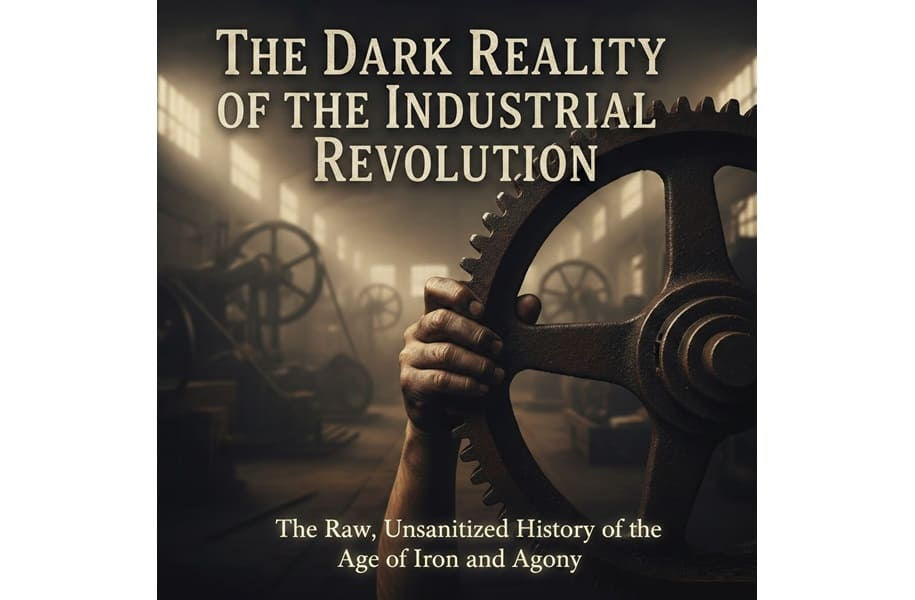
What stood out immediately was the structure. Normally, when I generate nonfiction with AI, it feels like loosely connected essays. This felt cohesive.
Generating the Introduction
I ran the introduction prompt next. The output didn’t start with dates. It started with a scene — a child coughing in a cotton mill, the air thick with fibers, fingers raw from machinery.
It felt immersive. Not exaggerated. Not fantasy. Just grounded and vivid. I still edited for flow and fact-checking (I always do), but I didn’t have to rewrite the whole thing — which is usually what happens with generic prompts.
The Chapters
I generated two full chapters as a deeper test. Each one came out around 1,800–2,000 words.
Here’s what I noticed:
No bullet-point fluff
No awkward AI transitions
No repetitive summary paragraphs
Strong narrative consistency
Clear thematic direction
And most importantly — it actually sounded like a documentary script.
The Cover Prompt Test
Out of curiosity, I also tested the cover prompt. The instructions were extremely detailed — lighting, color tone, typography placement, mood, texture, aspect ratio. The result looked far more professional than the generic “history book cover” prompts I’ve tried before.

If you publish on platforms like Amazon KDP, thumbnail visibility matters. This prompt clearly understands that.
The Result
I now have:
One nearly complete manuscript draft
Two additional project outlines mapped out
A potential YouTube documentary script adapted from Chapter 1
A repeatable format I can use for other niches
For $17, that’s more than fair.
Is it perfect? No. You still need to:
Fact-check
Lightly edit
Add your own judgment
But instead of wrestling with structure, I was refining. That’s a big difference.
My Honest Advice
If you’re expecting a “push one button, instant bestseller” tool — this isn’t that.
If you want a structured, commercially smart way to create dark, cinematic history content faster and with better tone control — this absolutely helps.
If you’ve been sitting on the idea of publishing in the history niche but feel intimidated by research and structure, this lowers that barrier significantly. For the price, it’s a low-risk way to test a potentially high-demand angle.
And if you’re serious about building a publishing brand instead of just experimenting randomly, this gives you a repeatable framework — which is honestly the hardest part to build from scratch.
That was my experience.
🔴Conclusion
That’s all what I want to share with you about 343 Prompts for Brutally Honest History Books. I hope that my review can give you a helping hand in deciding what is best for you.
Important Reminder: When you purchase this product through my special link, you’ll unlock exclusive, valuable bonuses that you won’t find anywhere else! (Please note: these bonuses are only available with the full purchase-not with trial or free versions.)
To claim your bonus gifts, simply complete these two easy steps:
⏩ Step 1: Click the Buy Now button below to secure your copy of this product.

⏩ Step 2: Once your purchase is confirmed, just send a copy of your receipt to lokireviewteam@gmail.com. I’ll verify your order and personally send you all the details on how to access your bonus materials.



Comments